Executive resilience training, brought into the 21st century
Senior managers are crucial to the success of their organisations, so it is essential that organisations invest in their wellbeing. Most corporate resilience training does the opposite — recycling outdated social-psychology content that leaves participants with no way to know whether any of it is working for them.
Why traditional resilience training fails senior people
Most corporate resilience training is comprised of run-of-the-mill material relating to social psychology — physical resilience, mental resilience, emotional resilience, social resilience. It is delivered as education: naming stressors, discussing strategies, building awareness. It produces knowledge, not a measured skill.
The flaw is structural rather than cosmetic. Participants acquire coping strategies but have no objective means of knowing whether those strategies are physiologically effective for them. Under genuine pressure they revert to prior habits — a phenomenon known as dysponesis — and the training fails to deliver. Awareness alone does not survive contact with a board meeting, a crisis, or a quarter that goes badly.
What Stress Inoculation does differently
In the first module a baseline is taken for each participant using an objective biofeedback measure, assessing the effectiveness of their current coping strategies. Follow-up assessments are taken throughout the six modules to determine the impact of training, producing pre- and post-training data for each individual.
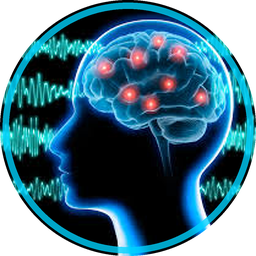
Participants are then introduced to advances in neuroscience and computer technology that give real-time feedback on the physical signs of stress as the mind produces them. Using computerised biotechnology, each participant gains immediate awareness of the physiological effects of stress drawn from their own experience, in an individual session.
Confidence in the efficacy of a strategy comes from seeing its physical impact. That confidence is the mechanism that prevents regression to previous unhelpful coping patterns — and it is precisely what education-based training cannot manufacture.
Delivery and integration
The program runs across six modules and is designed to be delivered either directly or through an organisation’s existing clinical infrastructure. The train-the-trainer pathway makes it a natural fit for EAP providers and large organisations with internal wellbeing teams: your people are trained to deliver it, and recertified annually to guarantee quality.
Sessions are delivered in person, because the biofeedback and take-home technology are part of the training itself. In 2025 the program was presented at the Global EAP Summit in Istanbul, at the Optum APAC conference in Singapore, and to EAP Italia in Milan.
What Stress Inoculation delivers
- An objective biofeedback baseline assessing whether each participant’s current coping strategies actually work
- Follow-up assessment throughout the six modules, producing individual pre- and post-training data
- Real-time physiological feedback during training, using NeXus/BioTrace
- HeartMath breath techniques, and take-home skin-conductance monitoring with the Mindfield eSense between sessions
- Take-home technology so training continues between modules
- A neuroplasticity component built to prevent regression to prior coping patterns
It is time to bring resilience training into the 21st century. Dr. Pyle, with 45 years of experience and the application of these advanced technologies, has built a program that does exactly that.
SI — frequently asked
Who is Stress Inoculation designed for?
Senior decision-makers in corporate organisations — people constantly managing the intellectual and emotional demands of complex roles. A parallel program, RTA, applies the same method to first responders.
How is this different from CBT?
They are complementary rather than competing. CBT works on the relationship between thoughts, feelings and behaviour. SI works on the physiological stress response underneath, and gives participants objective measurement of it. Dr. Pyle’s clinical background is in integrating both.
Is the program evidence-based?
Yes. It draws on peer-reviewed research published in Applied Psychophysiology and Biofeedback, Global Advances in Health and Medicine, and Psychiatry Research, and is endorsed by Dr. John Arden, a recognised author and speaker on neuroscience and psychotherapy integration.
Can it be delivered to a global workforce?
Yes. The train-the-trainer model was designed for exactly this — organisations and EAP networks with staff across multiple countries train their own facilitators, with periodic follow-up training and Q&A from IPS as part of the licence.
Same method, different pressure
Twenty minutes to see whether this fits.
Video consultations are available to discuss any of the six programs, how one might be tailored to your organisation, and the train-the-trainer pathway that lets your own staff deliver it on an ongoing basis.
Bookings require a minimum of 48 hours’ notice. Enquiries concern training programs for organisations — this is not a clinical appointment; for individual consultations please contact the practice directly.