What the training actually looks like
Conventional resilience training asks you to take its effectiveness on trust. This is the unedited biofeedback record of one participant taken through the method — baseline, early training, the session that went backwards, and the target being met.
How these records are published
Every graph below is a complete, unedited BioTrace physiological report, reproduced in full so the data can be seen exactly as it was recorded. Client names are masked by the software itself. Identifying details in the written background — including gender, occupation and the specific triggering circumstances — have been changed to protect confidentiality. Individual results vary, and nothing here should be read as a prediction of outcome for any other person.
Workplace stress and anxiety in a senior professionalSix modules · six BioTrace records · skin conductance and peripheral temperature
A senior professional referred while on medical leave with work-related stress and anxiety. The six recorded sessions below show the training taking effect — including the session where it did not.
Background
The participant presented following a sustained workplace situation. Eight months earlier they had taken a promotion into a newly created role, and on commencing were told the scope had widened considerably beyond what had been agreed. Willing to demonstrate commitment, they took the additional duties on.
There were not enough hours in the day for both parts of the role, and the participant was quickly working fifty-hour weeks. The unpaid overtime was raised with their manager and met with further demands and a dismissive response. The relationship deteriorated from there.
At the initial session the participant was on medical leave with a GP certificate citing stress and anxiety. They described poor sleep driven by rumination, physical shaking when driving near the workplace, headaches, decreased appetite, withdrawal from family, and increased irritability with their children — and described feeling trapped in the situation.
Treatment approach
The participant completed the standard six-module program. The biofeedback component was recorded throughout, measuring skin conductance (SC/GSR) and peripheral temperature. Each graph below is an unedited BioTrace session record.
The session records
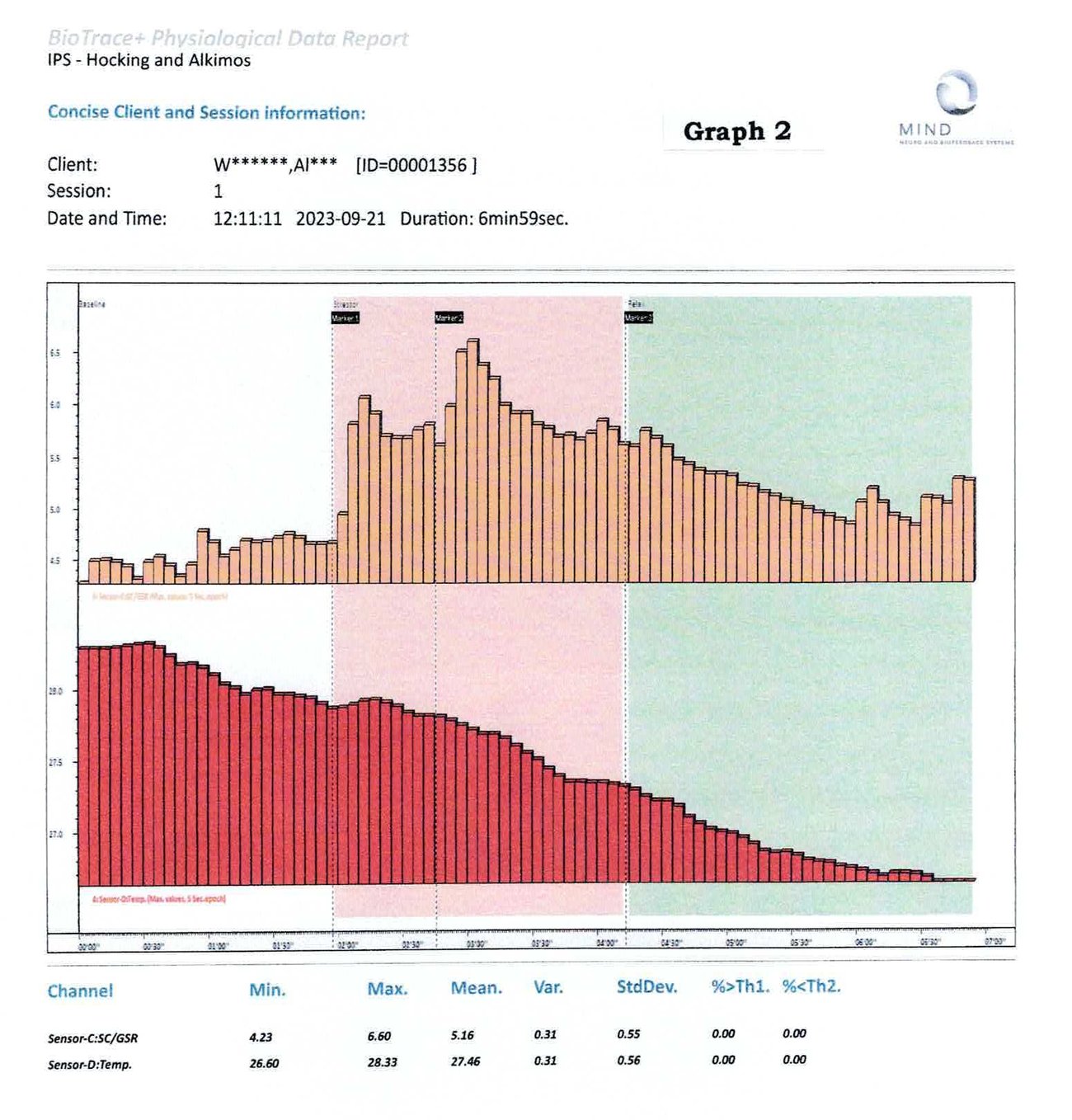
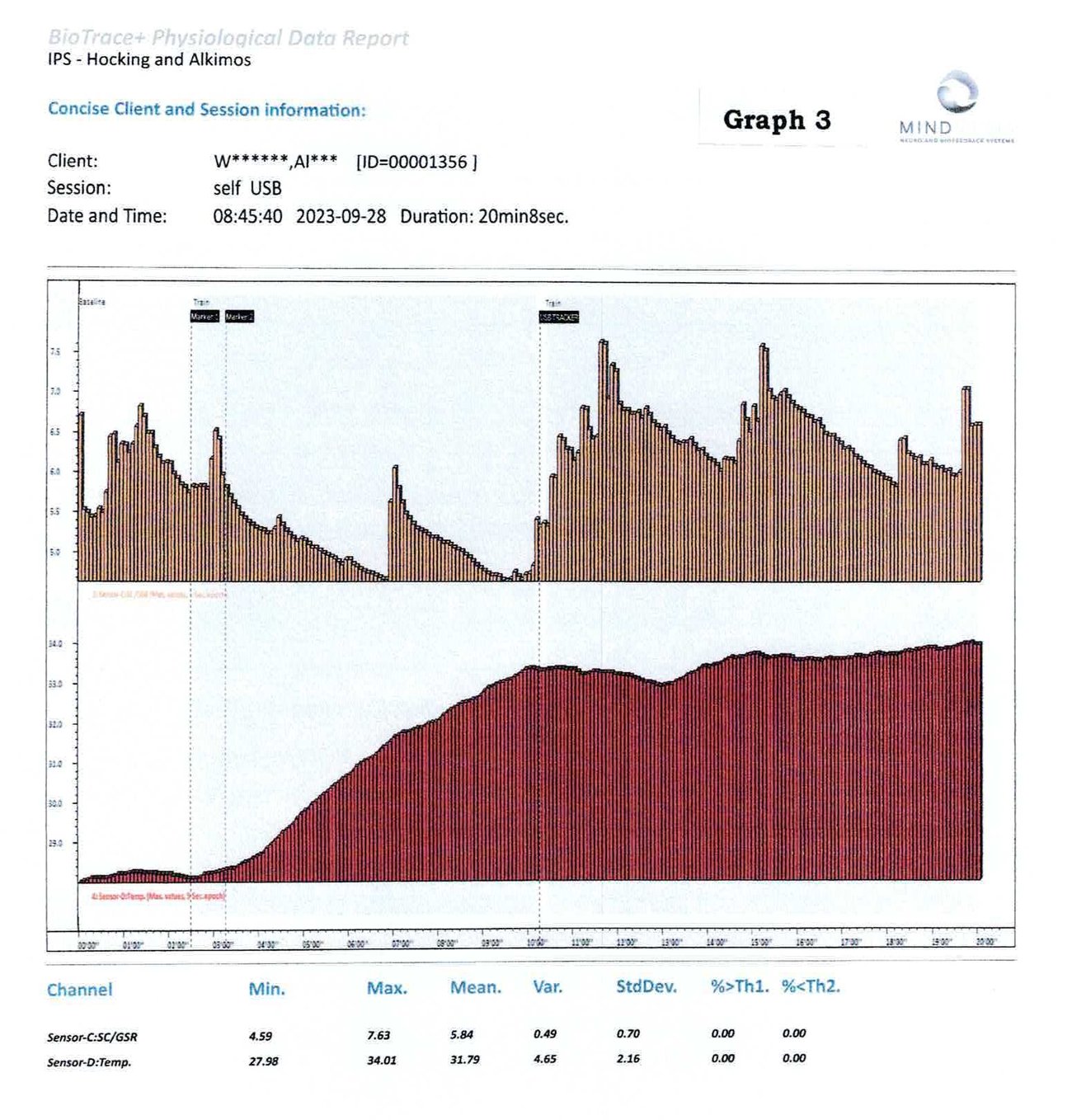
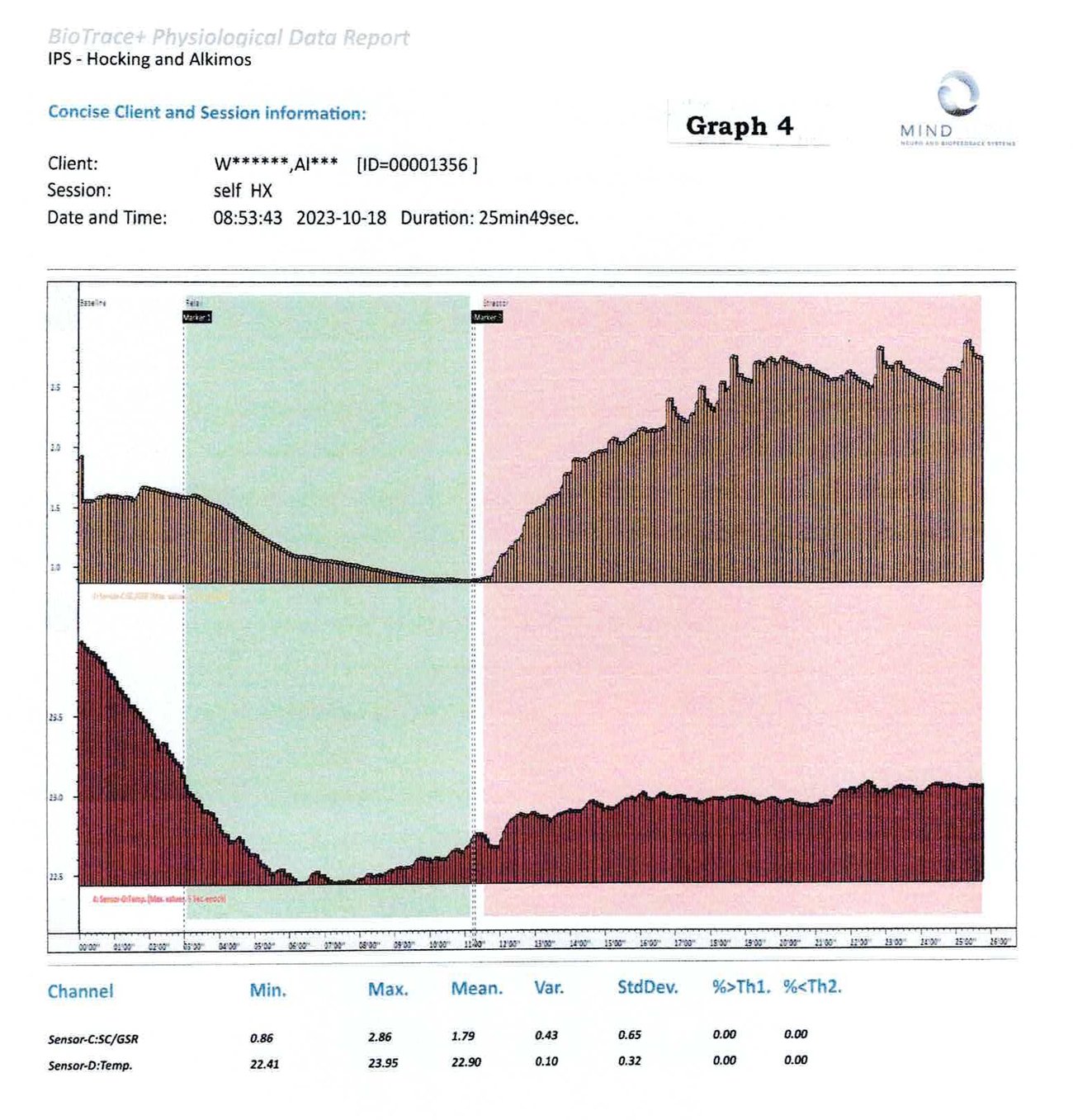
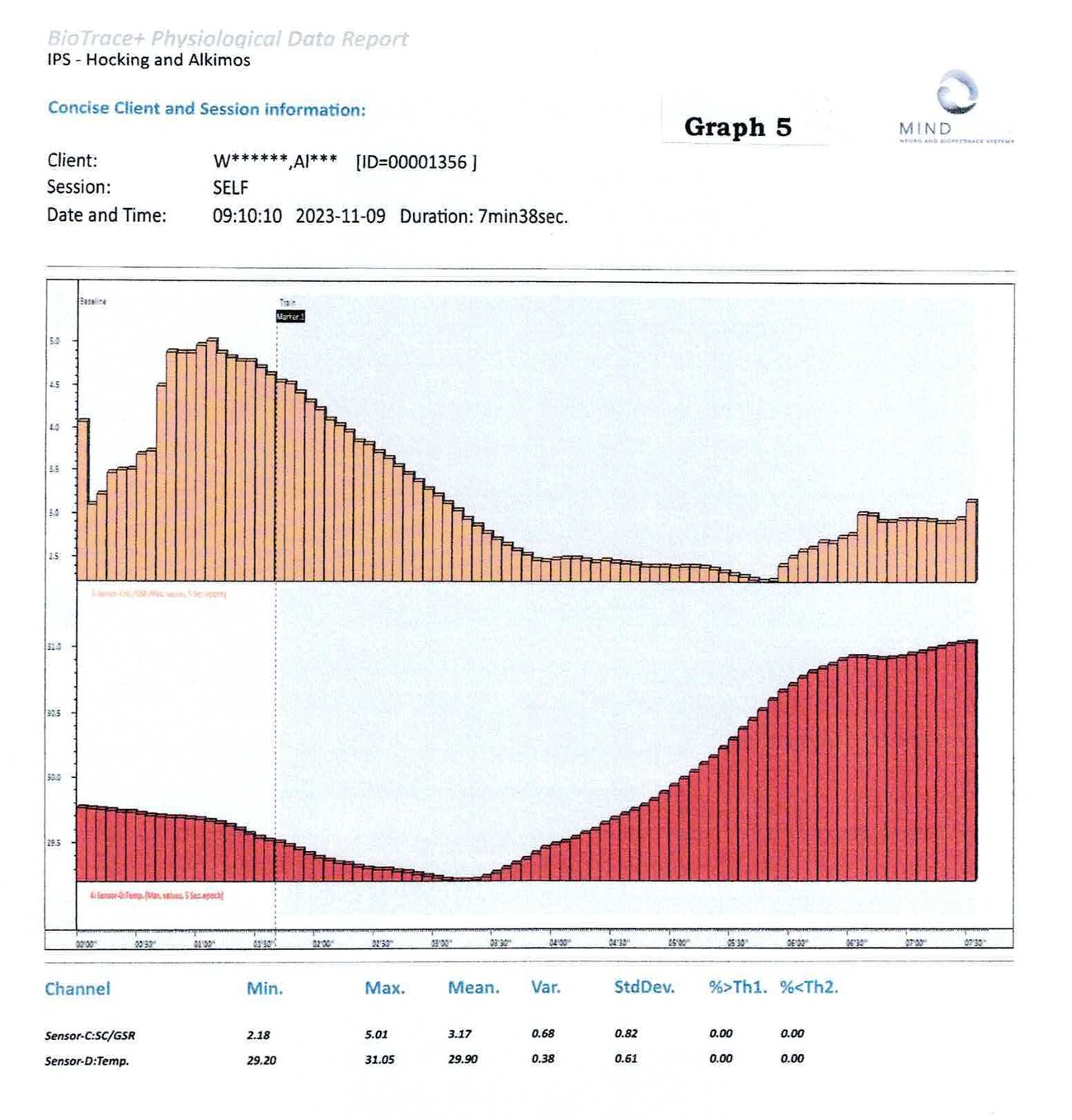
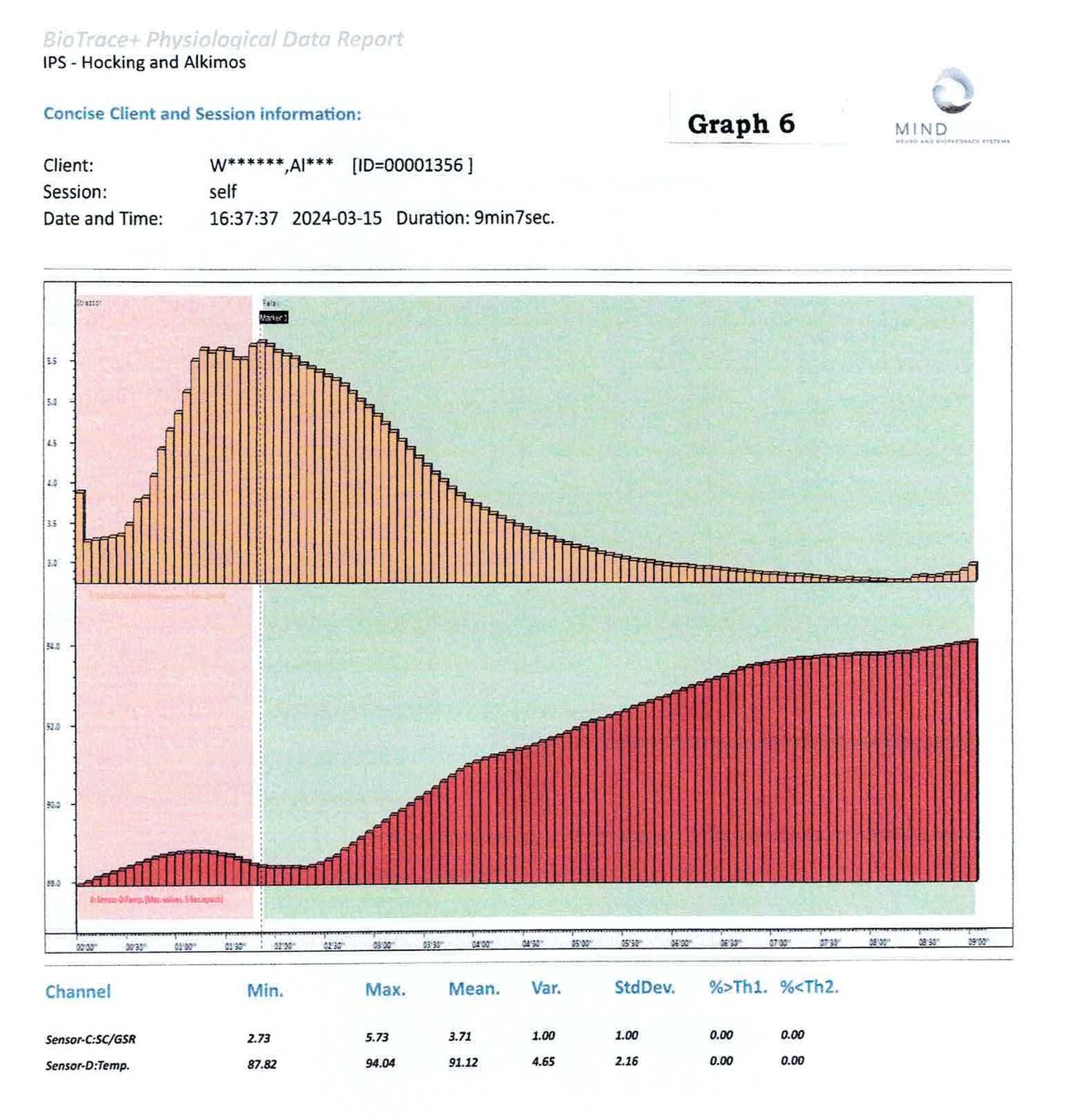
The value of this record is not that the participant improved. It is that they could see they had improved, in their own physiology, against their own baseline — including the session where they did not. That visible evidence is what stops a trained skill lapsing back into prior coping patterns under pressure.
About these records
Are these real session records?
Yes. Every graph is a complete, unedited BioTrace physiological report from the participant’s own sessions, reproduced in full rather than cropped, so the data can be seen as recorded. The client name is masked by the software. Identifying details in the written background, including gender and occupation, have been changed to protect confidentiality.
Why include the session that went badly?
Because it is the most informative one. A case study showing uninterrupted improvement tells you nothing about how the training behaves under real pressure. The fourth graph shows the participant overwhelmed by their own workplace triggers, and it is what demonstrated to them why the between-session practice mattered.
What is actually being measured?
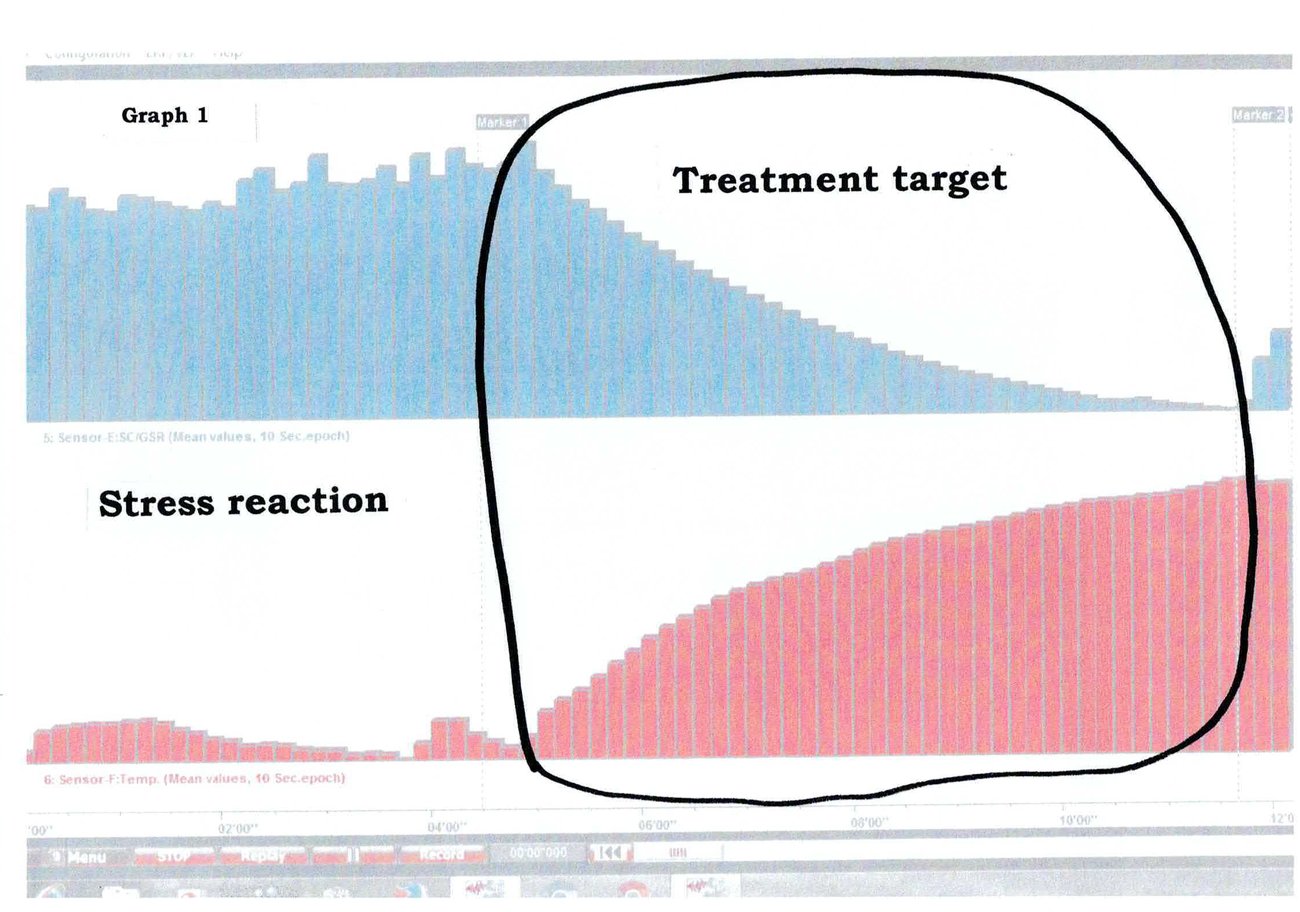
Skin conductance (SC/GSR), which rises with sympathetic nervous system arousal, and peripheral temperature, which falls as blood vessels constrict under stress and rises as the body settles. Together they give an objective, real-time read of the stress response that cannot be self-reported accurately.
Do results like this generalise?
No single case predicts an outcome for anyone else, and nothing here should be read as a promise of a particular result. What the record demonstrates is the method — an objective baseline, visible physiological feedback during training, and measurement against that baseline rather than against a group average.
Same method, different pressure
Twenty minutes to see whether this fits.
Video consultations are available to discuss any of the six programs, how one might be tailored to your organisation, and the train-the-trainer pathway that lets your own staff deliver it on an ongoing basis.
Bookings require a minimum of 48 hours’ notice. Enquiries concern training programs for organisations — this is not a clinical appointment; for individual consultations please contact the practice directly.